
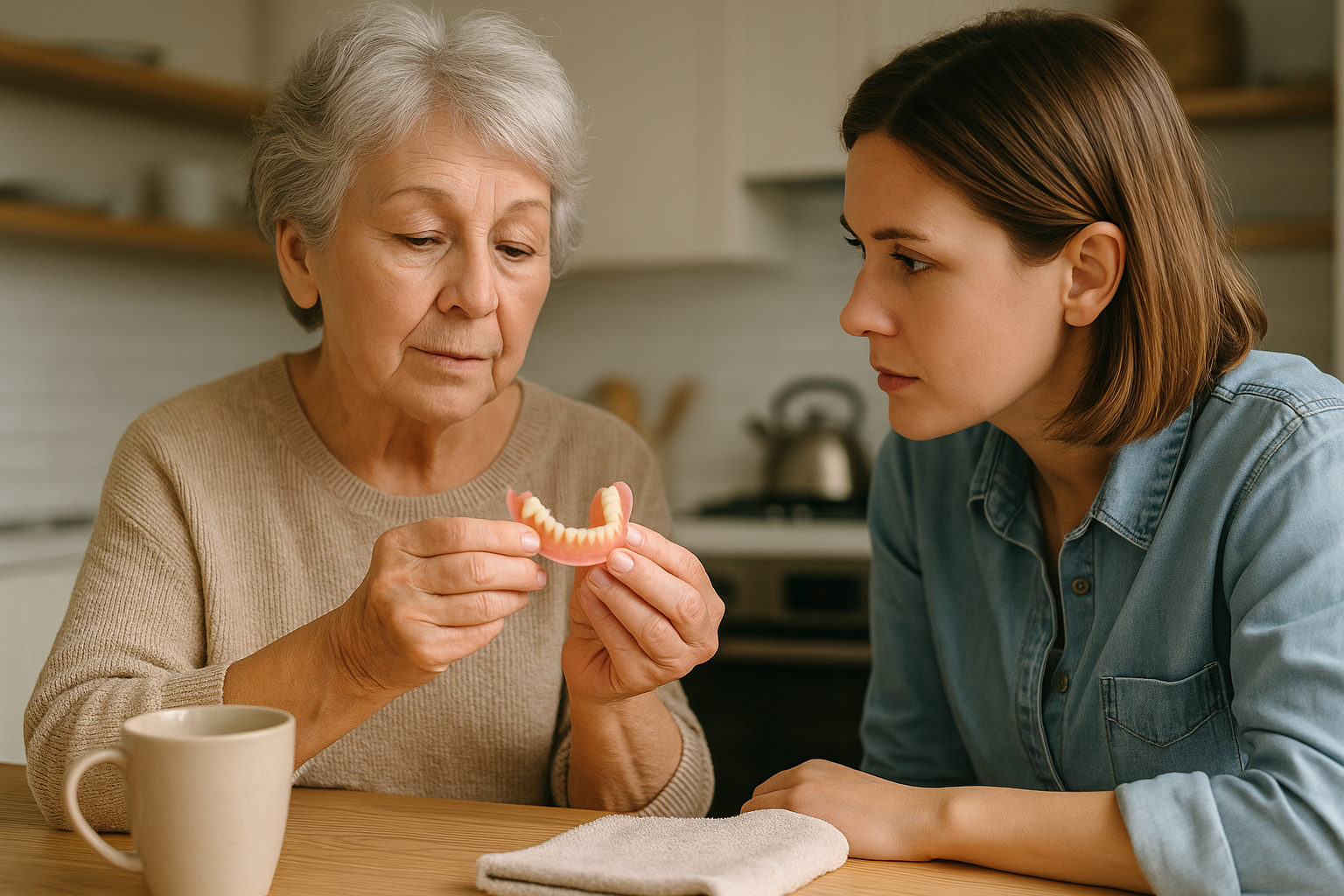
A sudden denture crack. A lost tooth. A broken clasp. These things always seem to happen at the worst possible time—just before a family gathering, mid-vacation, or the night before an important work meeting. If you wear dentures, you’ve probably faced at least one of these stressful moments. And while panic is a natural reaction, the way you respond in those first few minutes makes all the difference.
In this post, we’ll break down the three most common denture emergencies and show you how to handle them calmly and smartly. We’ll also explain when you can use a denture repair adhesive and when you should skip the DIY and contact a professional instead.
Emergency 1: Cracked or Broken Denture Base
This is by far one of the most common—and stressful—denture emergencies. You pick up your denture and notice a visible crack running along the base, or worse, it snaps in half.
What Causes It?
- Dropping your denture onto a hard surface
- Years of wear and tear
- Dentures made incorrectly
- Ill-fitting dentures
Immediate Steps to Take
- Stop Wearing It: Continuing to wear a cracked denture can make the damage worse—and more painful.
- Inspect the Damage: If it’s a hairline fracture, it might last a while longer if babied. If it’s snapped in two, call ahead and get into the clinic as soon as possible
- Use Denture Repair Adhesive (Only as a LAST RESORT): Over-the-counter denture repair kits like DenTemp or DentureFit can help hold a cracked base together temporarily until you can get to your denturist. These adhesives are not long-term solutions and should never replace professional work.
When to Call the Clinic
Even a small crack can affect the fit, and any pressure on a damaged denture can hurt your gums or cause cuts. Call us immediately to schedule a repair or reline. Learn more about how the denture reline process works here.
Need emergency care in Edmonton? Contact Schaefer Denture Clinic for fast, expert repair. We offer complete dentures, relines, and precision refits.
Emergency 2: Dislodged or Broken Teeth
Imagine biting into something soft and realizing one of your denture teeth has popped out. It happens more often than people think, especially with older or worn dentures.
What Triggers This?
- Accidental drops
- Biting into hard or sticky foods
- Natural wear from aging dentures
- Improperly made dentures
If you’re eating things like nuts, steak, or even sticky candies, these can put extra stress on teeth and cause them to break or fracture if they are worn out. Want to know what foods to avoid? Read this: Things You Can’t Eat With Dentures If You Want Them To Last.
Can You Glue It Back?
Using a denture repair adhesive for a missing or broken tooth may be tempting, but proceed with caution. Some adhesives are safe, but improper placement or using superglue (never do this!) can make permanent repair more difficult/expensive or even impossible later.
If the tooth has completely come off, collect the piece and store it safely in a sealed container.
What You Should Do
- Do not try to reattach the tooth permanently.
- Avoid chewing on that side of the mouth.
- Call for an appointment to have the tooth professionally bonded or replaced.
At Schaefer Denture Clinic, we can usually resolve these issues the same day. And if it’s time to consider a longer-lasting solution, our implant dentures offer strength and stability you’ll never get with traditional options.
Did You Know?
Cracks and fractures in dentures are more likely to occur in older appliances due to material fatigue, especially after five years of use. According to the Journal of Prosthetic Dentistry, the average lifespan of a complete denture is approximately 5 to 7 years. Beyond that, the acrylic base becomes more brittle, increasing the risk of sudden breaks during chewing or cleaning.
Wearing old or poorly fitting dentures doesn’t just lead to emergency repairs—it can also cause long-term gum irritation and even accelerate bone loss in the jaw. That’s why regular checkups and timely replacements matter.
Emergency 3: Broken Clasp or Metal Part
This is especially frustrating for patients wearing partial dentures. A broken clasp can cause the denture to shift, leading to discomfort, uneven bite pressure, and sore spots.
Why It Happens
- Metal fatigue from repeated insertion/removal
- Accidental bending of the metal
- Biting the dentures into place, or removing them forcibly
- Cleaning the denture too aggressively
Temporary Fixes
While there are some denture repair adhesives that claim to help with partial denture repairs, metal parts need professional reworking. A home adhesive will rarely hold long-term and can make the issue worse if it interferes with alignment.
Here’s What To Do
- Don’t try to bend the metal back yourself—it can snap or damage the denture further.
- Store the denture in a clean, dry container.
- Use a spare if available, and call your denturist right away.
If your denture is too damaged for repair, immediate surgical dentures might be the right path. We also provide non-denture options for those exploring alternatives: View here.
When Denture Repair Adhesive Helps—And When It Doesn’t
Helpful For:
- Hairline cracks in the denture base
- Reattaching a tooth temporarily
- Holding the denture together until you get to a clinic
Not For:
- Long-term fixes
- Replacing or repairing metal clasps
- Fixing large fractures
A good adhesive can be a lifesaver in the short term, but relying on it too long can cause more damage to both the denture and your oral tissues.
How to Prevent These Emergencies in the First Place
Prevention is always better than emergency fixes. Here are a few things we always recommend to clients:
- Soak carefully: Avoid boiling water, which can warp your denture.
- Handle over a soft towel: Most breaks happen from dropping it in the sink.
- Brush gently: Use an extra- soft brush, no harsh scrubbing.
- Annual checkups: Even if your denture feels “fine or good enough,” we often catch issues before they become problems.
Traveling soon? Check out our guide on how to prioritize denture care while traveling for smart packing tips and travel-safe habits.
Denture Repair Services in Edmonton
At Schaefer Denture Clinic, our goal is to make sure no one has to go through the day with a broken or painful denture.
We offer:
- Emergency denture repair services
- Temporary liners for healing sore gums
- Adjustments and relines
- Replacements when the time comes
With over 65 years serving the Edmonton community, we know how to deliver care that feels human and helpful, not rushed or transactional. We’ll walk you through the process, explain your options clearly, and get you smiling again—fast.
Take Denture Emergencies Seriously, But Don’t Panic
Accidents happen. And while a broken denture can throw off your whole day, it doesn’t have to stay that way. Acting quickly, using denture repair adhesive only when appropriate, and calling a trusted denturist are your best next steps.
Whether it’s a small chip or a full break, we’re here to help. Our in-house lab lets us handle most fixes same-day, and we’ll always prioritize your comfort and fit.
Need Denture Help Now?
Call Schaefer Denture Clinic or book online. Let’s get your smile and your confidence back on track.


 Appointments fill up fast—don’t miss out!