
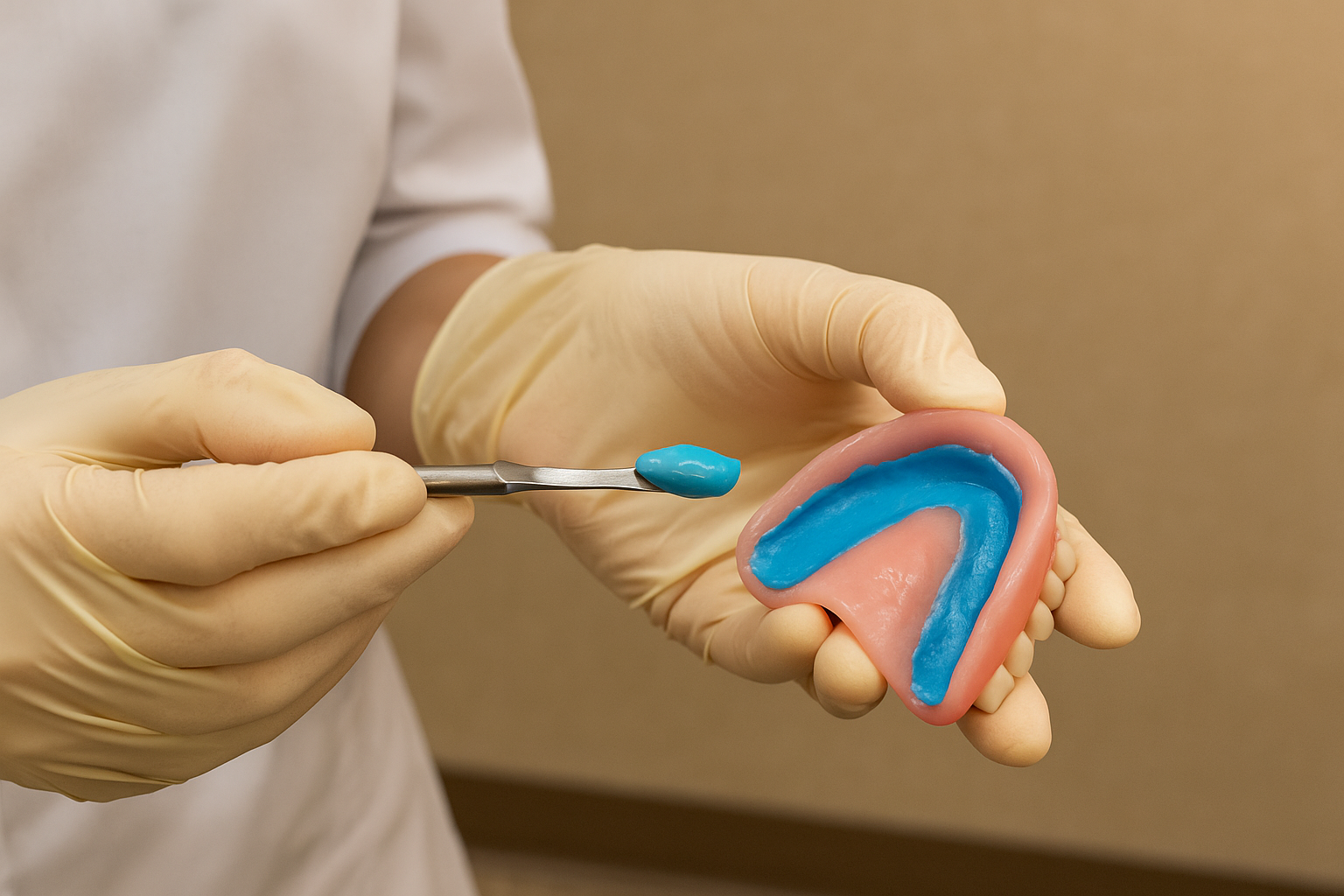
Dentures aren’t something you “set and forget.” While dentures that fit well will protect your gums and underlying bone. While they don’t completely stop the gums and underlying bone from shrinking. Even if your dentures feel like they fit, they can still shift on a microscopic level and cause the gums and underlying bone to shrink faster and faster. Your gums change. Your bite adjusts. Maybe one day, what used to feel snug starts sliding, pinching, or just feeling…off. That’s where relines come in—and if you’ve ever wondered what the denture reline process actually looks like (and why it matters more than you think), this one’s for you.
A denture reline isn’t just a touch-up—it’s a re-fit designed to match your mouth again, from the inside out. It’s the fix for sore spots, looseness, and that annoying extra tube of adhesive you’ve been relying on. It also allows the dentures to stimulate the gum and underlying bone structure in a healthy way again! This slows the loss of the gum and underlying bone, and can keep both healthy, for much longer than without doing anything.
Let’s take you through exactly how it works, what to expect, and why it’s one of the most important ways to keep your dentures working with your mouth, not against it. How to keep your gums and bones healthy for the length of your lifetime, instead of having dentures cause damage to them!
Why Dentures Stop Fitting the Way They Used To
Here’s a reality check: your gums are constantly changing. After your teeth are removed, the bone that once supported them starts shrinking—a natural process called resorption.
- Within the first year of tooth loss, up to 25% of supporting bone is lost in the jaw. The bone that used to support the teeth.
- This bone loss continues over time (About 5%-10% every 5 years), which means the surface your denture sits on is constantly shifting and changing.
Even well-made dentures need support to stay comfortable and effective. That’s what relines are all about: rebuilding the inside of your denture to adapt to your mouth’s new shape. Compare a reline of a denture to an oil change of your car. An oil change needs to be done regularly to maintain the health of the engine and its components. If not done regularly, the car and engine will break down unnecessarily fast, and may even completely stop working altogether. In this case, the car is your gums and underlying bone, and the oil change is the reline process.
What Is the Denture Reline Process?
Relining a denture means resurfacing the part that touches your gums (the fitting surface). Think of it as re-padding your denture with a fresh, more accurate mold of your mouth. This helps it feel snug again, prevents sores, and improves how it functions when you speak or chew. It also prevents excess bone loss, and can slow bone loss by stimulating the gums and underlying bone in a healthy way.
There are three types of relines:
- Permanent Soft Reline – Flexible and more comfortable for sensitive gums or those with very little gum or bone structure left. Needs to be done at least every 1-2 years.
- Hard Reline – Longer-lasting and more durable, ideal for people who’ve had dentures for over a year. Can be done every 1-3 years.
- Temporary Reline – Meant for someone wearing dentures, whose gums and underlying bone are changing or in need of healing. Like after extractions or wearing ill-fitting dentures for a long time. Needs to be replaced every 1-3 months.
Step-by-Step: What Happens During a Permanent Denture Reline
Let’s break down how to reline dentures—step by step.
Step 1: Clinical Evaluation
First, your denturist checks how your denture fits now. They’ll look for:
- Movement during speech or chewing
- Pressure points and gum irritation
- Bite issues (where teeth don’t meet properly)
- Amount of bone loss since your last visit
This isn’t guesswork—it’s a detailed evaluation that guides the best reline type for your current needs. That’s why yearly check-ups are important, a detailed record of your gums is taken and kept each year.
Step 2: Taking a New Impression
Once it’s confirmed that a reline is needed, a new impression is taken inside your existing denture. This captures the updated shape of your gums with high precision using a silicone-like material. Think of it as refreshing the denture’s foundation without rebuilding the whole thing. The denture is roughed up and cleaned, then dried thoroughly. The impression material is placed in the denture, and then the denture is seated in your mouth. The denturist will ask you to bite together lightly. They will then pull on the lips and the cheeks lightly to shape and mould the edges of the impression.
Step 3: Lab Work Begins
The relining impression is poured up and encased in stone. This allows us to have a stone version of your gums. Then the impression material is removed and the old fitting surface of the denture is ground away to make space for brand new denture material. Then the material—either soft or hard—is added to the base. The lab then cures, trims, and polishes the denture to make sure it’s clean, smooth, and ready to go. Turnaround varies from same-day relines, overnight, to a couple of days, depending on the type and condition of your denture and gums.
Step 4: Fitting + Adjustments
At the follow-up appointment, your denture is inserted, minor adjustments are made, and your bite is checked to make sure everything feels and functions the way it should. Not much besides the fit, changes during the reline. In certain cases, we add more or less denture to replace the height that has been lost from the denture. Most patients don’t need any adjustments afterwards. But 3 months of adjustments are included just in case!
What Happens During a Temporary Denture Reline (Tissue Conditioner)
Temporary relines—also called tissue conditioners—are often used when your gums are in the middle of healing, or if you’ve been wearing dentures that haven’t fit properly for a while. They’re soft, gentle, and designed to give your tissues a break while still allowing you to wear your denture. Here’s how it works:
1. Clean + Prep the Denture
First things first: the denture gets a deep clean. Plaque, calculus, or any old liner material is removed. Then, the inside surface (where the denture touches your gums) is lightly roughened with a tool—just enough to help the new material grip properly.
2. Mix the Tissue Conditioner
Tissue conditioners come as a powder and liquid. Your denturist mixes them into a smooth, even consistency—not too runny, not too thick. This material will form a new, soft layer that cushions your gums.
3. Apply to the Denture
A thin, even layer (usually around 2–3 mm thick) of the material is added to the inside surface of the denture. The goal is to apply it smoothly, without trapping air bubbles.
4. Seat the Denture
The denture is then placed back into your mouth. You’ll be guided to bite down gently—no clenching or heavy pressure—just a natural, relaxed bite. The denture is carefully positioned to ensure comfort and alignment.
5. Functional Molding
Now comes the functional part. You’ll be asked to make small, natural movements—swallowing, talking slightly, and smiling. This helps shape the soft material to your gums in a way that reflects how you actually use your mouth. It usually takes around 2-5 minutes.
6. Remove + Trim
Once the material has set, the denture is removed and any excess is trimmed away from the edges using a scalpel or fine scissors. This keeps the borders smooth and prevents irritation.
7. Reinsert + Final Check
The denture is reinserted. Your denturist will check the fit, smooth out any rough spots, and ensure that pressure is distributed evenly. Comfort and stability are the priorities here.
8. Aftercare Instructions
You’ll be given clear instructions on how to care for your denture during this time—typically, that means gentle cleaning, avoiding alcohol-based products, and no harsh brushing. A follow-up visit is usually booked within 3 to 7 days to reassess the fit or make any adjustments.
Signs It’s Time for a Reline (Don’t Wait Too Long)
Many patients put off relining until their dentures are practically falling out of their mouth! That can lead to more severe bone loss, infections, and a dramatically more expensive fix later.
Here’s when to call your denture clinic:
- Your denture rocks when you chew or speak
- You need adhesive more than once a day
- You notice sore spots or pressure ulcers
- The denture feels “tight” in some areas and loose in others
- The dentures feel fine, but hurt when you chew
- It’s been over one year since your last reline or assessment
Still not sure? Check out this blog on when it’s time to fix loose dentures.
How Often Should You Reline Dentures?
Most denturists recommend a reline every 1 to 3 years, depending on:
- How fast your bone is changing (osteoporosis can be a culprit of massive changes very quickly)
- How well you clean and care for your dentures
- If you’ve had any dental surgeries, extractions, Illnesses, or weight changes that could impact gum shape
Ignoring this timeline can mean more discomfort, faster bone loss, and an eventual need for a full remake. Even worse…. Dentures that cause too much damage can ruin your gums and underlying bone for the rest of your life! This makes it almost impossible to wear complete dentures. And can reduce your chewing power by 50% or more, for the rest of your life! In some cases, surgical intervention is the only way to get your gums back to health.
Why Relining Matters for Long-Term Oral Health
Let’s talk about health, not just comfort. An ill-fitting denture isn’t just annoying; it can actively damage your gums and bone.
Ill-fitting dentures move. Even if your dentures feel great, after 2+ years, micro-movements start occurring during chewing. This causes a constant pounding on your gum tissue (turns your dentures into little hammers), which leads to:
- Accelerated bone resorption
- Painful sore spots
- Inflammation
- Even “jelly gum” syndrome (yes, it’s as bad as it sounds)
Learn more about how relines help prevent long-term bone loss in our post about foods you should avoid with dentures.
What If a Reline Isn’t Enough?
Sometimes, your denture is just too far gone for a reline. That’s when we may recommend:
- A complete replacement – If the teeth are worn or the base is too damaged
- Implant dentures – For those who want stability without glue or slipping
- New complete dentures – When the old ones have simply aged out
Explore your options on our services page, including implant dentures and complete dentures.
Common Misconceptions About Relines
Let’s bust a few myths we hear all the time:
- “My denture still fits, so I don’t need a reline.”
A denture can feel fine and still cause damage if it’s not adapted to your current gum shape. - “I’ll just use more adhesive.”
Adhesive isn’t a solution—it’s a temporary crutch. Overuse can lead to infections, increased bone loss and doesn’t address the core issue.
“Relines are just cosmetic.”
While in some cases relines can help with the looks, Relines are meant to restore the function, comfort, and longevity of your denture.
Reline vs. Repair vs. Remake: Know the Difference
Service | What It Is | When You Need It |
Reline | Resurfacing the fit inside the denture | Every 1–3 years or after bone changes |
Repair | Fixing cracks or breaks | When your denture is damaged/broken |
Remake | Full denture replacement | Every 5–7 years, or when worn/damaged |
Real Talk: How Relines Change Lives
We’ve had countless patients come in convinced they need a new denture—only to leave with their current one relined, feeling like new again.
One patient told us they hadn’t smiled fully in two years because of soreness. After a simple hard reline and some bite corrections, they said, “It feels like I got my old mouth back, I can eat the things I want again, and way less food is getting underneath!”
Don’t Wait Until It Hurts
A reline isn’t just a fix—it’s maintenance. It’s like rotating your tires, changing your oil or tuning your instrument. When done regularly, it prevents bigger issues and keeps your dentures working for you, not against you.
If it’s been more than a year since your last reline—or if your dentures just aren’t sitting the way they used to—it’s time for a chat.
Book your denture reline consultation at Schaefer Denture Clinic. You’ll feel the difference.
The Fit Makes the Function
The denture reline process is more than a quick adjustment—it’s essential for keeping your dentures aligned with the shape of your mouth as it changes. It’s one of the smartest, simplest ways to protect your gums and underlying bone for the future, avoid discomfort, and make your dentures feel brand new again.
You wouldn’t walk around in shoes that no longer fit, so why wear dentures that cause pain or slip every time you eat? And just like shoes, even those very old, very comfy shoes may feel good. However, underneath they are probably causing damage to the soles of your feet, your hips/knees, or your posture.
Schaefer Denture Clinic offers personalized denture services—from relines to implant-supported options—designed to restore your confidence and comfort.
Take the first step. Schedule your visit today.


 Appointments fill up fast—don’t miss out!